Betting on Smart Technology: How Penn Entertainment Is Reinventing Casino Facilities Management
The lights never go out at a casino. Neither do the machines, the kitchens, the climate systems, or the fire suppression units. For Jim Arnold, Executive Director of Facilities at Penn Entertainment, that’s not just a fun fact; it’s the defining reality of his job.
“It’s something I knew on an intellectual level, of course, but it wasn’t until I joined Penn that I fully realized all the ramifications and consequences of things literally running 24 hours a day, seven days a week, every week, throughout the year,” he says.
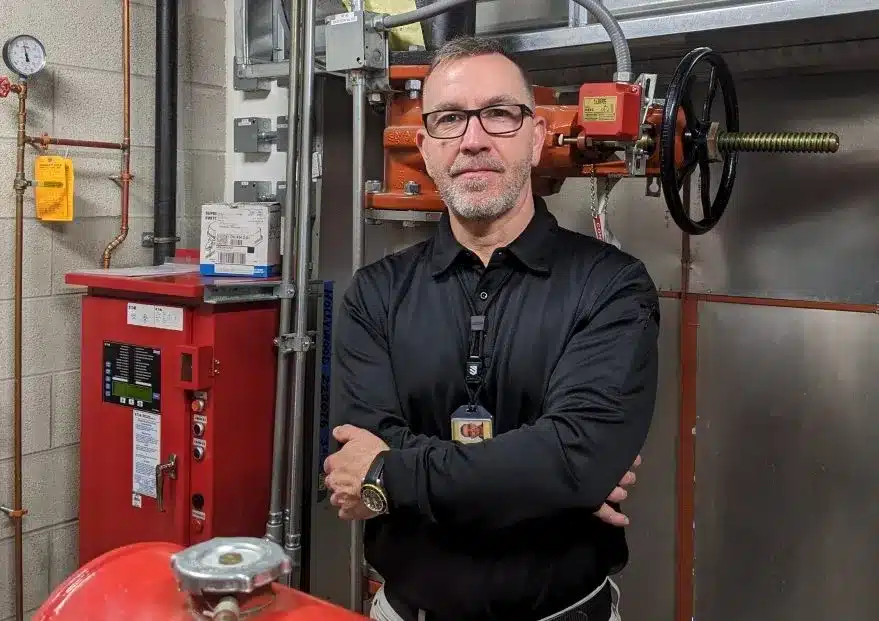
Arnold came to Penn in July 2022 with nearly three decades of construction and facilities management experience already behind him. But overseeing Hollywood Casino Toledo, a 285,000-square-foot entertainment complex in Ohio, introduced him to a new level of operational complexity.
Lighting the Way to Efficiency
Walk into any of Penn Entertainment’s 44 casino properties and you’re immediately surrounded by thousands of lights: on the gaming floor, above the machines, across the ceilings, and throughout the exterior. They create the electric atmosphere guests expect, but they come at a cost: energy consumption, excessive heat, and constant maintenance.
Arnold is addressing all three at Hollywood Casino Toledo through a full transition to LED lighting. The efficiency gains are significant: a 7-watt LED produces the same light output as a 14-watt fluorescent or 60-watt incandescent bulb. And while a standard incandescent burns out after roughly 1,000 hours and a fluorescent after about 10,000, an LED can last up to 100,000 hours. That’s fewer bulb changes, lower energy bills, and less heat pumped into a space that already works hard to stay comfortable.
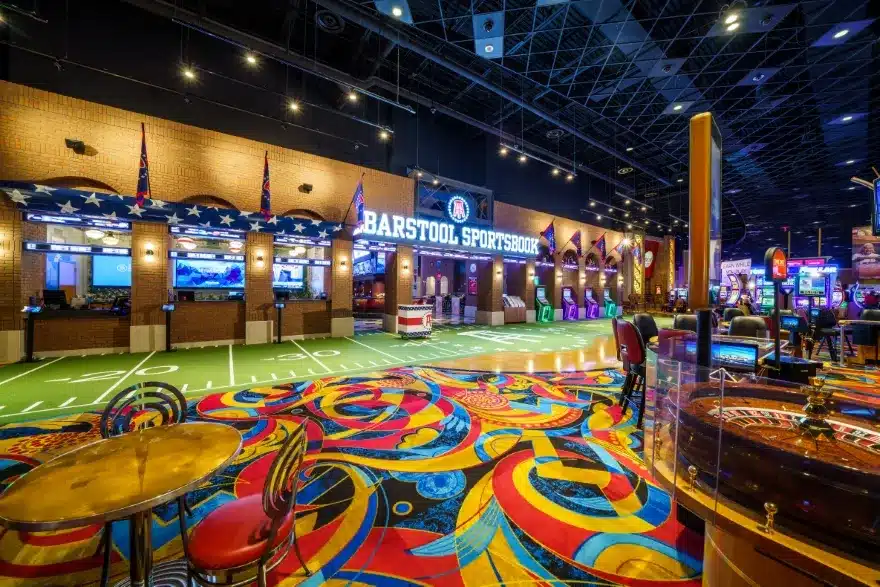
Given the sheer volume of fixtures across the property, Arnold expects the full LED conversion to take up to 36 months; a timeline he’s navigating in close partnership with his electrical contractors.
“It’ll make a drastic change across the board without the casino-goers having to sacrifice any of their experience,” Arnold says. “It’s also just one of the many steps my team and I are taking to make technology work for us.”
Behind the Scenes: Automation as a Game-Changer
The lighting project is visible. The automation overhaul is not, but Arnold considers it equally transformative.
He is responsible for every system that keeps Hollywood Casino running: boilers, HVAC units, fire suppression, strobes, speakers, walk-in coolers, kitchen exhaust hoods, and more. Monitoring and managing all of these manually is not only labor-intensive, it leaves the facility vulnerable to costly surprises.
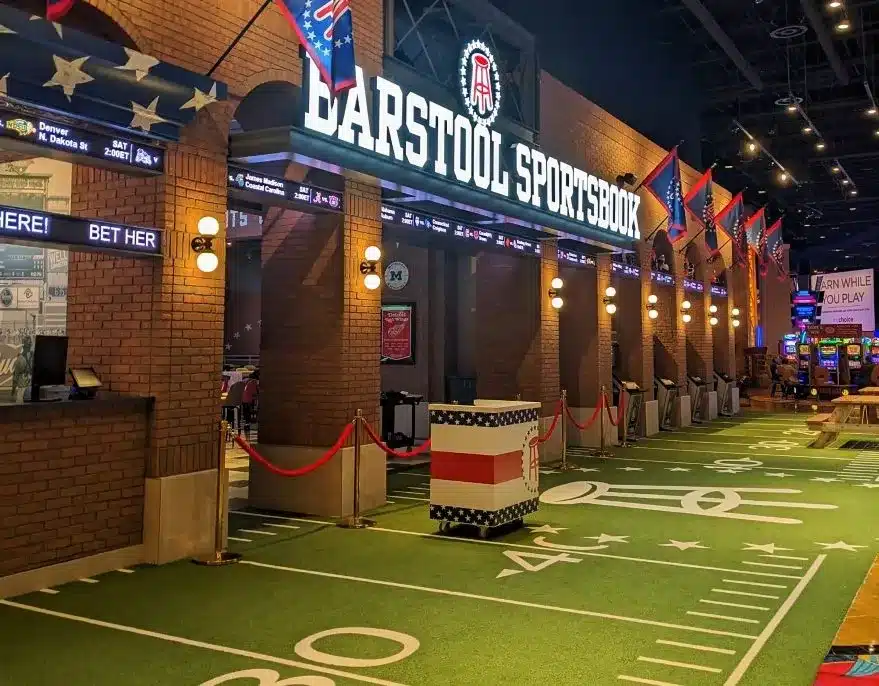
To change that, Arnold partnered with GEM Service, the HVAC contractor under the Rudolph Libbe Group, the same Ohio-based construction firm that built the casino in 2012, to implement a comprehensive building controls automation system. Once complete, it will allow staff to remotely monitor and manage HVAC, boilers, lighting, and fire systems from a single platform.
Getting leadership buy-in required a compelling case.
“This kind of technological upgrade requires consideration of the return on investment because of the initial cost, so it was initially a tough sell,” he recalls.
Arnold made it concrete. He walked executives through a real scenario: an issue that arose on Christmas Day that pulled him into the building in person to resolve, a disruption that remote access would have handled from anywhere. Approval came in February 2023. The initial system migration was slated for completion by August 2023, with full facility integration to follow within the year.
“Being able to remotely monitor systems will allow the facilities personnel to respond quicker and more accurately to the situation, and we’re all looking forward to this upgrade,” Arnold says.
Building a Smarter Casino, One System at a Time
Arnold’s broader vision is a facility that, as he puts it, “sits at the intersection of technology and human capital.” Smarter systems don’t replace people; they free them up to do more meaningful work while reducing errors, costs, and environmental impact. That includes building toward better battery backup infrastructure, a critical need for a property that cannot afford a single moment of electrical failure.
He’s also making sure these technology investments align with Penn’s executive leadership, and so far, that alignment has been solid.
“They understand that the best customer experience isn’t shaped just through having shiny lights and fun slot machines but a fully functioning, intelligent facility that is user-friendly for the staff and guests, and quiet, so no flushing toilets or the like,” Arnold says.
For now, Arnold is still in deep assessment mode. Mapping every system, every space, every opportunity across the property.
“I’m currently surveying and understanding every nook and cranny of Hollywood Casino Toledo, and I’m not rushing,” he says.
From Submarines to Slot Machines
That methodical approach has roots going back decades. Before masonry, before facilities management, Arnold spent six years in the U.S. Navy as a nuclear submariner, from 1988 to 1994, serving as a technician and specialist in ballistic missile submarine support systems, including electronic, hydraulic, and pneumatic launch systems. Precision and accountability weren’t optional in that environment.
He carried that discipline into a career that eventually took him to a foreign military installation in Pakistan from 2016 to 2022, and then to Penn, where he’s also found room to pursue a personal passion. As a self-described foodie, Arnold introduced the farm-to-table garden concept at Hollywood Casino, set to launch in 2023. Nuclear submariner, construction pro, facilities leader: that’s not a résumé construction recruiters in Ohio come across every day.
His early influences were equally hands-on: a father who ran a plumbing company and a stepfather who was both a woodworker and career military man.
“I’ve always loved the construction industry and now where it intersects with entertainment, because things are changing rapidly, sometimes daily,” Arnold says. “Penn was the perfect fit for me because I’m a high-energy person and this environment is very much my cup of tea.”
“I’m a strong proponent for technology, especially in an entertainment setting like this, where it can enhance customer experience but also reduce costs, help the environment and reduce the burden on staff, including me and my team,” he adds.
In a business where the house always has to be running, Arnold is making sure it’s also running smarter.


