How Job Site Technology Impacts Worker Productivity and Fatigue
Job site technology can either help or hinder your crew. The right tools reduce physical strain and improve safety, keeping teams productive. Poorly implemented technology creates digital overload and causes productivity to drop. The key is smart implementation that solves problems without creating new ones.
The Dual Impact of Job Site Technology
You have heard the pitch about new technology transforming your job sites. Sometimes this is true. Other times, you get frustrated crews juggling five different apps before they can start working.
The data shows every construction worker faces at least one fatigue risk factor on the job. The biggest issues are still long hours, physical demands, and tight deadlines. Technology can address some of these problems, but only when it makes work easier. Adding technology that requires constant data entry or disconnected systems does not solve fatigue. It creates a new form of it.
Sources of Construction Fatigue
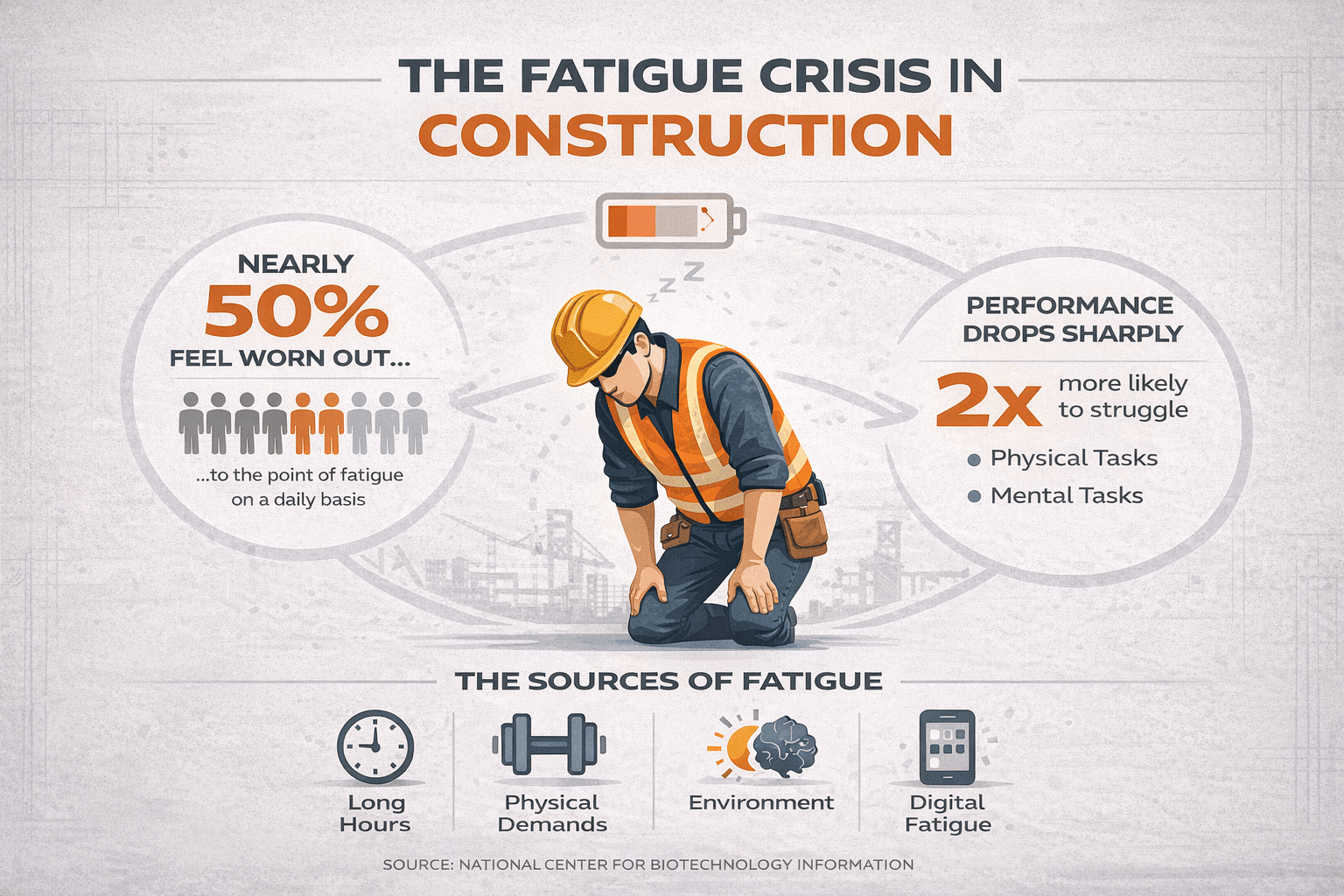
Your crews are tired. Nearly half of all construction workers feel worn out multiple days a week. As well as being a morale issue, it is also a direct threat to safety and your project timeline.
Physical exhaustion is part of the job. Ten-hour shifts of manual labor take a toll as workers lift heavy materials and hold awkward positions. But fatigue also affects cognitive function, slowing decisions and impairing hand-eye coordination. Research shows fatigued workers are twice as likely to struggle with both physical and mental tasks. That is when accidents happen, which can blow your budget and schedule.
Fatigued workers are twice as likely to struggle with physical tasks and over twice as likely to have trouble with mental work.
Environmental factors like extreme heat or cold accelerate this exhaustion. The mental demands of the job also contribute. Your crews constantly read plans, coordinate with trades, and stay alert for hazards. A new challenge, digital fatigue, has also emerged.
Technology That Reduces Fatigue
The right technology makes your crew’s job easier and safer. It often works in the background without requiring constant attention.
For example, wearable sensors catch problems before they become incidents by tracking heart rate and body temperature. You get an alert when someone shows signs of heat exhaustion, allowing you to pull them from a task before they get hurt. Automated equipment and ergonomic power tools take on the heavy lifting that wears down workers’ bodies. This allows crews to work longer and more safely.
Good project management software also eliminates wasted time. When digital plans are on a tablet, workers are not walking back to the trailer for information. Everyone knows what they need to do, which keeps the project moving. Biometric time clocks streamline payroll and help enforce break schedules, ensuring workers get the rest they need.
The Problem of Tool Overload
This is where things go wrong. You implement new tools, but now your workers spend their time hunting for information across different systems. They switch between apps dozens of times a day. That constant context-switching can kill productivity by up to 45%.
Your foreman should not need three different logins to check a schedule, update progress, and clock in the crew.
When systems do not talk to each other, your workers must manually move data from one platform to another. This digital complexity leads to more mistakes, higher anxiety, and poor decisions. It affects the very things the technology was supposed to improve. The problem gets worse when you roll out new systems without proper training, which leads to frustration and resistance.
How to Implement Technology the Right Way
You can avoid a pile of confusing apps with a smarter approach to implementation.
Start by getting input from your foremen and crews. They know which problems need solving and which features are just distractions. Use their insights to select integrated platforms that connect with your existing systems. Your time tracking should talk to payroll, and your project management should feed into accounting. Aim for a few core platforms instead of a dozen disconnected apps.
Train your people properly. Show them how the tools make their jobs easier and safer, and provide support as they learn. Roll out new systems in phases. Start with one function and build on early wins. Most importantly, track what actually matters. If injury rates increase or productivity drops, the technology might be the problem. Use real-world feedback to make adjustments.
Human Factor
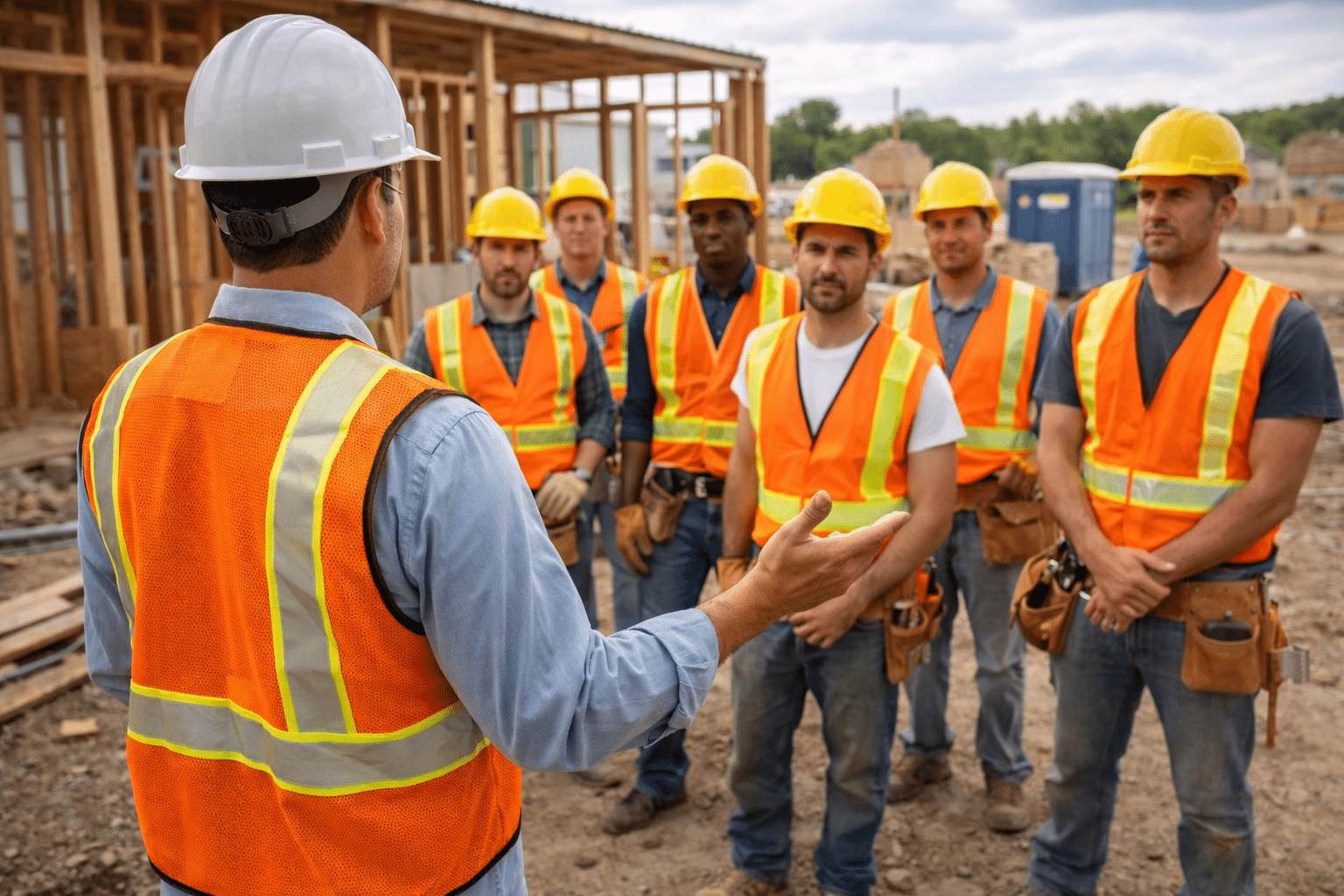
Even the best technology is just a tool. Your people make or break a project. Technology works best as part of a complete safety program, not as a replacement for good management. Your crews still need adequate rest, reasonable hours, and a supportive culture.
Technology works best as part of a complete safety program, not as a replacement for good management or system.
Keep the human element in charge. Automated alerts and data dashboards provide valuable information, but they do not replace an experienced superintendent who knows the crew. Use technology to enhance judgment, not replace it. Be transparent about what data you are collecting and why. Address any job security concerns honestly. Technology should make work safer and more efficient to help you retain skilled people.
The Bottom Line
The construction industry faces real workforce challenges like labor shortages and complex projects. Technology can help, but only when implemented thoughtfully.
Companies that succeed with technology involve their crews in decisions, invest in real training, and choose connected platforms. They remember that technology serves people, not the other way around. The best tools fade into the background and support the work without becoming another problem.
By focusing on technology that genuinely reduces fatigue and improves safety, you make construction careers more sustainable. Workers who feel supported perform better and stick around longer. This ensures your projects succeed.
Frequently Asked Questions
How does technology affect employee productivity in construction?
Technology boosts productivity when it reduces manual work and streamlines communication. Companies using well-integrated digital platforms often see productivity increase by over 20%. However, when workers must use too many disconnected tools, productivity can drop by more than 40% from the mental strain of switching between apps.
How do job site conditions affect worker productivity?
Job site conditions directly impact productivity. Extreme temperatures, excessive noise, and poor lighting cause physical and mental strain, leading to slower work and more mistakes. Technology can help monitor environmental conditions and ensure workers take necessary breaks, which helps mitigate these effects.
How does fatigue affect productivity in construction?
Fatigue severely hurts productivity. Physical exhaustion slows work speed, while mental fog leads to poor decision-making and more errors. Fatigued workers are more than twice as likely to struggle with their tasks. This also increases the risk of accidents that can derail a project.
What is the difference between physical and digital fatigue in construction?
Physical fatigue is the exhaustion from manual labor, long hours, and environmental stress. Digital fatigue is a newer problem caused by managing too many apps, constant notifications, and fragmented digital workflows. Today’s workers often face both, which makes smart technology choices critical.
Can technology completely eliminate construction worker fatigue?
No, technology cannot eliminate fatigue, but it can significantly reduce it. Tools like wearable sensors and automated equipment lessen physical strain and help prevent accidents. However, workers still need adequate sleep, proper nutrition, and a supportive company culture. Technology is one part of a comprehensive fatigue management strategy.
What are the warning signs that technology is increasing worker fatigue?
Look for red flags like frequent complaints about too many apps, rising error rates, or low adoption of new tools. If your crew is bypassing official systems for informal communication, or if productivity drops after a new technology is introduced, the tools are likely part of the problem.


